







Road safety early warning system
 |
System Introduction |
Some national and provincial highways have complex terrain, with narrow roads, numerous curves, and steep slopes. Some also pass through villages, resulting in complex traffic conditions and frequent collisions between vehicles on main roads and those on side roads. Although various warning signs and alerts, such as wide-angle mirrors and signs, have been installed in accident-prone sections, the effectiveness is still insufficient. To address traffic safety issues in unfavorable terrain or complex road sections such as sharp turns and steep bends, there is an urgent need to adopt intelligent traffic technology for real-time dynamic detection, alerts, and guidance of road traffic, achieving the goal of safe and orderly road traffic and protecting the lives and property of drivers.
Road safety early warning is an intelligent system applicable to various traffic scenarios, mainly including a vehicle monitoring system, early warning equipment, and a control platform. The vehicle monitoring system uses advanced microwave vehicle detectors to monitor passing vehicles, measuring their speed, vehicle type, etc., and sends the data to roadside intelligent interactive base stations. The base stations analyze and distribute the data, and control voice and display devices to remind vehicles, improving driving safety. The base station can also transmit road traffic data to the management platform via fiber optic or 4G, providing a clear and centralized view of traffic conditions.
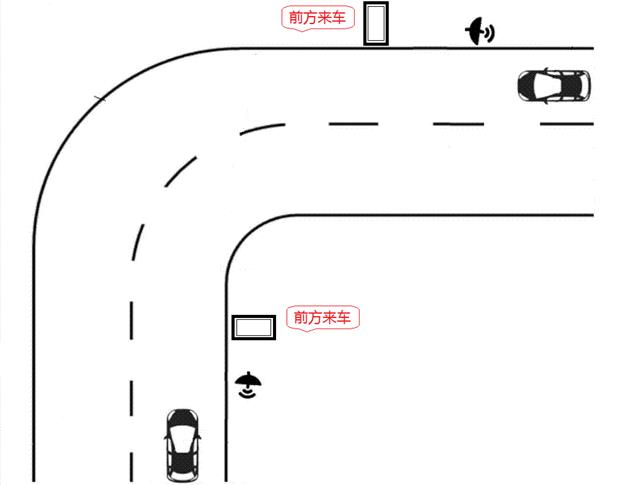
The curve meeting warning system is installed on the right side of both ends of the curve, in the direction of vehicle travel. When a microwave vehicle detector detects an approaching vehicle, it sends the vehicle information to the base station on the other side of the curve. The display screen shows the meeting information, and an audio prompt reminds drivers to slow down. A deployment diagram is shown below:
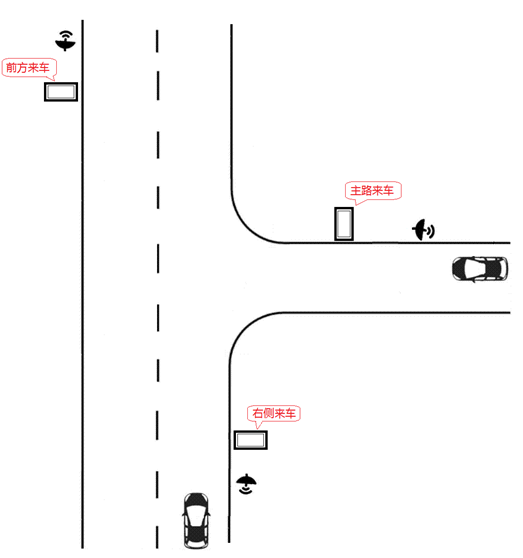
The level crossing warning system is installed on the right side of each intersection on the road in the direction of travel. Microwave vehicle detectors simultaneously monitor vehicles approaching from side roads and vehicles approaching from the opposite direction, sending vehicle information to the base station on the main road. The display screen shows the oncoming traffic information and plays an audio warning to slow down. The system is equipped with a video event detection system; front-end cameras track, locate, identify, and detect the movement of vehicles, pedestrians, and other traffic targets, automatically reporting the data to the control platform. The platform analyzes, judges, and stores the events. In the case of a major accident or disaster, it can send a linked warning to the corresponding roadside base station, such as "Road collapse ahead, please detour" or "Accident ahead, please detour." A deployment diagram is shown below:
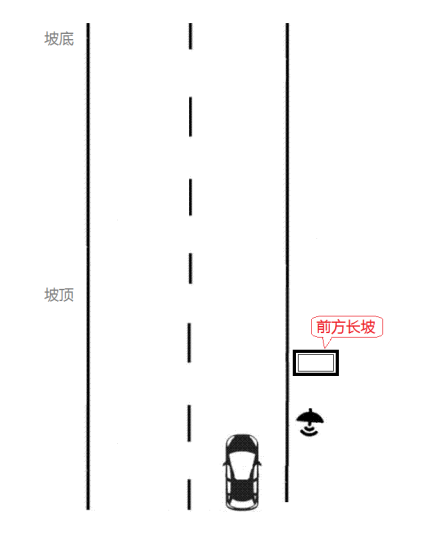
The long/steep slope warning system is installed before long/steep slopes. After the microwave vehicle detector detects an oncoming vehicle, it displays the license plate number and warning message on the variable message sign to remind the driver to slow down before the long/steep slope ahead.
| |
System Composition |
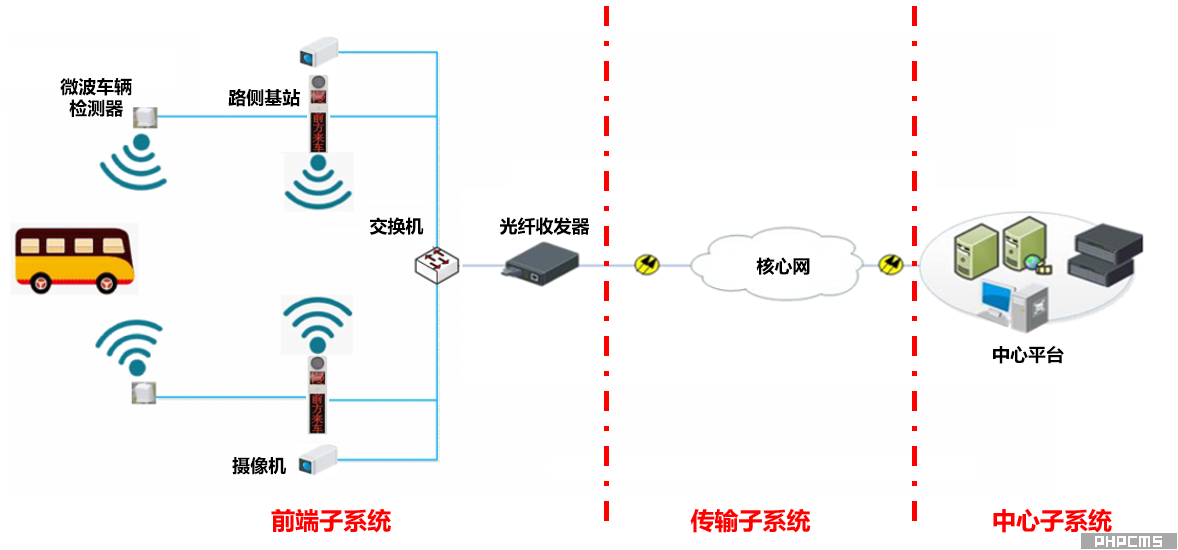
The road safety early warning system mainly consists of microwave radar vehicle detectors and roadside base station equipment. The roadside base station equipment includes a power module, main control unit, voice unit, display unit, data acquisition unit, and communication unit.
The microwave radar vehicle detector monitors vehicles, identifies vehicle types, and measures speed. The roadside base station has human-computer interaction functions such as LED display and voice playback. Its internal power module provides the system with DC power of different voltages. The main control unit mainly analyzes, processes, and distributes data, and controls other sub-units. The voice unit receives control data from the main control unit, parses it, and controls the speaker to play the corresponding voice. The display unit receives control data from the main control unit, parses it, and displays the corresponding characters on the LED screen. The data acquisition unit can connect to various external sensors and send data to the main control unit for processing. The communication unit is mainly used for communication and data parsing between devices with different interfaces. The main components and architecture of the system are shown in the figure below.
When a vehicle is about to enter a curve, a microwave vehicle detector installed on the roadside monitors the vehicle's entry and measures its speed, sending the data to a roadside base station. The main control unit inside the roadside base station analyzes the data. If the vehicle is speeding and there is no oncoming traffic in the opposite lane, the roadside base station's screen displays "You are speeding"; otherwise, it displays "Caution: Curve." Simultaneously, it sends vehicle information to the oncoming roadside base station. Upon receiving the vehicle data, the oncoming roadside base station displays "Oncoming traffic" on its screen and plays a voice prompt. If a vehicle also enters the curve in the opposite lane at the same time, the screen will display "Oncoming traffic" and play a voice prompt.
